
A hydrophobic spunbond repels liquid, while a hydrophilic one absorbs and distributes it. The difference is not in the fiber itself, but in the treatment applied to the material.
This adaptability allows the same spunbond to be used in products as diverse as diapers, sanitary pads, wipes, covers, or repellent barriers. In material science, treatment transforms function.
Spunbond: the base material
Spunbond is a nonwoven material made of continuous polypropylene filaments, arranged randomly and thermally bonded together. Its lightweight yet strong structure makes it highly versatile: it can be used in hygiene, medical, packaging, or agricultural applications.
On its own, spunbond has natural hydrophobic properties, meaning that polar liquids (such as water) do not easily penetrate it. However, non-polar liquids can be absorbed more easily.
Through specific treatments, its interaction with liquids can be controlled—transforming the same material into hydrophilic or enhancing its hydrophobicity even against non-polar liquids, depending on the intended application.
Hydrophobic spunbond
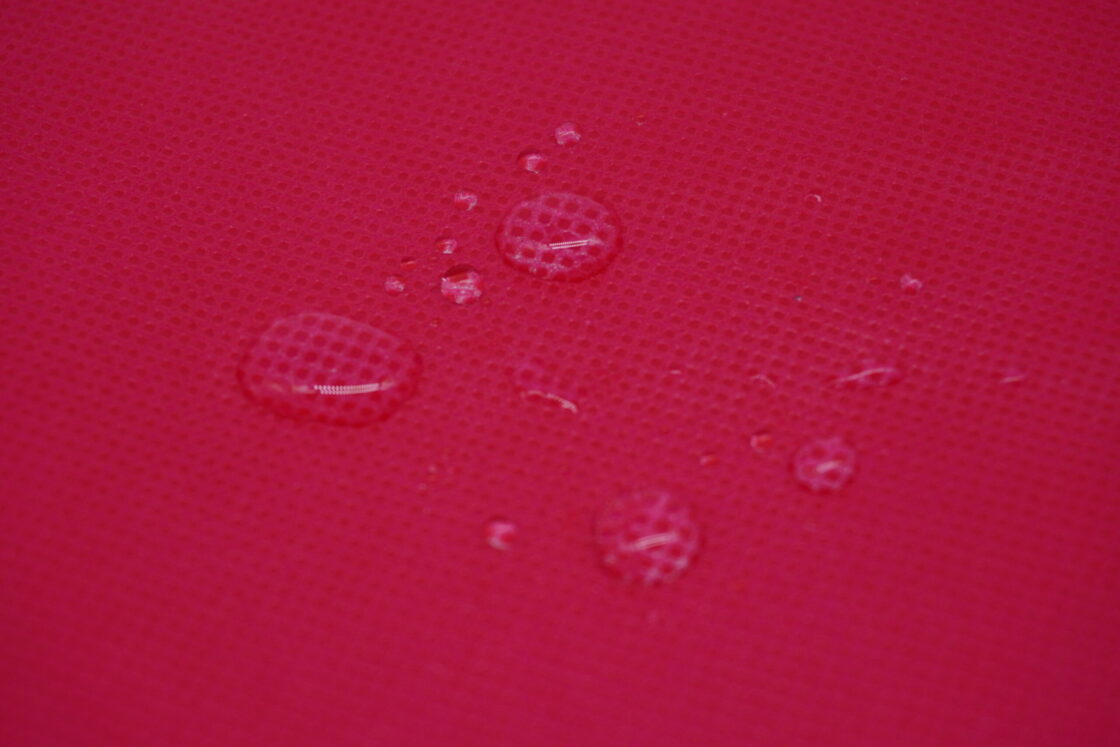
A hydrophobic spunbond is characterized by preventing polar liquids from penetrating its structure. This behavior is achieved through treatments that reduce the affinity between the fibers and the liquid, creating low surface energy on the material’s surface.
Advantages and technical applications:
- Controlled impermeability: water forms droplets that remain on the surface without being absorbed, protecting inner layers or sensitive contents.
- Protection and barriers: ideal for covers, packaging, bags, or technical barriers where keeping the surface dry is critical.
- Versatility without altering the base: the treatment acts on the surface of the spunbond, so it does not change the mechanical strength or structure of the material.
In practice, a hydrophobic spunbond allows the same fabric that could absorb liquids under a different treatment to be used as a protective layer, maximizing functionality according to product design.
Hydrophilic spunbond
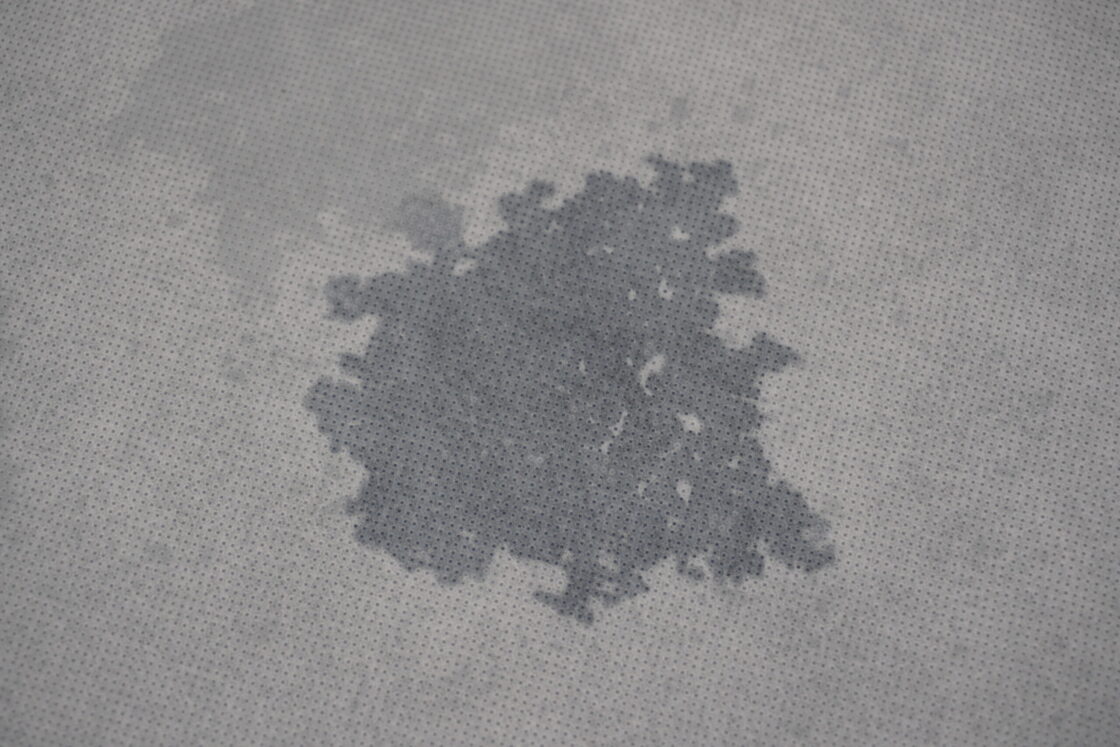
Hydrophilic spunbond is modified to promote the absorption and distribution of polar liquids within its structure. This is achieved through treatments that increase the material’s affinity with water and reduce surface tension, allowing the liquid to penetrate, spread evenly, and be retained.
Advantages and technical applications:
- Efficient absorption: liquid is not concentrated in one spot but distributed evenly throughout the structure, improving the performance of hygiene products.
- Enhanced comfort: in diapers, sanitary pads, or wipes, fast and uniform absorption reduces leakage and improves user experience.
- Adhesive compatibility: the hydrophilic nature allows glues and adhesives to penetrate properly, ensuring uniform bonding in multilayer structures.
Hydrophilic spunbond transforms a material that originally repelled liquids into a functional absorbent fabric, ready for applications requiring controlled retention and distribution of water.
Hydrophilic vs. hydrophobic: the same material, opposite functions
The true advantage of spunbond treatments is that the same material can perform completely opposite functions depending on how it is processed:
| Characteristic | Hydrophilic | Hydrophobic |
|---|---|---|
| Behavior with water | Absorbs and distributes | Repels and keeps the surface dry |
| Typical applications | Diapers, sanitary pads, wipes | Covers, bags, protective barriers |
| Effect on the fiber | Does not alter mechanical strength, increases liquid affinity | Does not alter mechanical strength, reduces liquid affinity |
| Main function | Liquid retention and distribution | Protection against moisture |
This duality shows that the function of spunbond does not depend on its base composition, but on how it is adapted through treatment.
Conclusion
In nonwovens, the same spunbond can be transformed into an absorbent or repellent material simply by applying a hydrophilic or hydrophobic treatment.
This allows manufacturers and designers to leverage a single type of fiber for very different applications—from absorbent hygiene products to protective barriers—maximizing the material’s versatility.
In material science, treatment transforms function, demonstrating that it is not the fiber that defines the usefulness of spunbond, but how it is adapted to each need.