
Can a nonwoven smell? Not only that: it can release fragrance in a controlled way for weeks.
For those of us working in the development and sourcing of technical materials, this statement is not a sensory curiosity but an industrial opportunity. Incorporating aromatic microcapsules into a technical nonwoven opens the door to new functionalities without altering the material’s base structure.
It involves adding an olfactory sensory dimension to a substrate that has traditionally been designed for its mechanical, filtration, absorption, or barrier properties.
The result is the so-called scented nonwoven: a nonwoven material with fragrance or odor-neutralizing capability designed to release active compounds progressively when triggered by stimuli such as friction, pressure, humidity, or temperature.
This article explains, from a technical and evidence-based perspective, how textile microencapsulation applied to nonwoven materials works, which systems are used in the industry, the regulatory implications involved, and the sectors where it provides real added value.
What is microencapsulation applied to nonwoven materials?
Technical definition
Textile microencapsulation is a technology that consists of encapsulating an active ingredient (in this case a fragrance or odor-neutralizing agent) inside a micrometric polymer microcapsule.
These microcapsules are subsequently fixed onto the surface of the textile or nonwoven substrate through binder systems or impregnation processes.
Microcapsules usually have diameters between 1 and 100 microns, depending on the application and manufacturing method.
The core contains, the aromatic or active compound, while the polymer wall protects it until controlled release occurs.
How do fragrance microcapsules work?
The release mechanism can be activated by:
- Mechanical friction (rubbing, handling, body movement)
- Pressure
- Increase in temperature
- Humidity
- In some systems, gradual diffusion through the polymer wall
When the wall breaks (mechanical rupture) or allows controlled permeation of the compound, the aroma is released into the environment.
This system differs significantly from simple perfume impregnation, where the compound evaporates quickly after application.
Difference between direct impregnation and microencapsulation
| Direct impregnation | Microencapsulation |
| Immediate release | Controlled release |
| Rapid evaporation | Long-lasting durability |
| Low resistance to use | Stimulus-activated release |
| Difficult intensity control | Controlled dosage |
Microencapsulation turns fragrance into a technical functionality, not just a superficial additive.
Integration of microencapsulation into nonwoven manufacturing processes
At which stage of the process is it applied?
In most cases, the application occurs after nonwoven formation, through processes such as:
- Padding (impregnation bath with microcapsules and binder)
- Spray coating
- Gravure coating
- Foam finishing
In integrated spunbond or meltblown lines, it can be applied during finishing stages, provided the temperature does not compromise microcapsule stability.
Compatibility with different nonwoven technologies
- Spunbond: highly compatible, especially with PP or PET
- Meltblown: requires careful control due to fine structure
- Needlepunched: good mechanical anchoring
- Airlaid / wetlaid: possible through compatible aqueous systems
Porosity and basis weight influence capsule retention.
Technical challenges
- Substrate adhesion: appropriate binder required
- Aroma migration: control of surface blooming
- Mechanical resistance: avoiding excessive fragility
- Impact on physical properties: slight weight increase and possible touch alteration
- Thermal stability in later processes
The balance between microcapsule load and mechanical properties is critical.
Odor neutralization vs fragrance: two different approaches
Perfuming is not the same as neutralizing odors.
Fragrance microcapsules
Contain essential oils or aromatic compounds whose function is to create a perception of freshness or wellbeing.
Odor-neutralizing systems
They may incorporate:
- Cyclodextrins (molecular capture)
- Absorbent agents
- Reactive compounds against odor molecules (amines, sulfides)
Odor neutralization is particularly relevant in:
- Sportswear
- Healthcare products
- Anti-odor bags
The choice depends on the objective: sensory experience or technical odor control.
Industrial applications of scented nonwoven materials
1. Personal hygiene
Wet wipes (baby and adult)
Wipes may incorporate microencapsulated fragrance activated during use, improving sensory perception without oversaturating the product.
Requirements include:
- Compliance with cosmetic regulation (EC Regulation 1223/2009)
- Dermatological control
- Compatibility with aqueous formulations
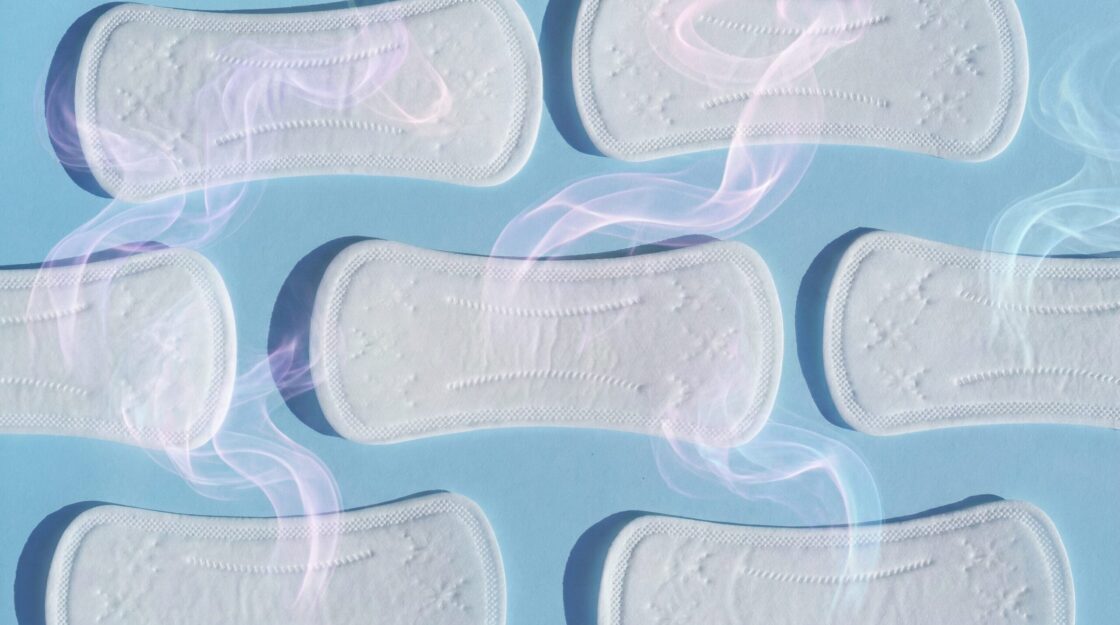
Diapers and sanitary products
Light fragrance applications for freshness sensation, while preventing excessive migration and ensuring skin safety.
Technical value: product differentiation in mature markets.
2. Home applications
Scented cleaning cloths
Progressive fragrance release during use. Compatible with dry or lightly moistened wipes.
Scented wardrobe bags
Technical nonwoven with lavender or eucalyptus microcapsules for weeks-long release.
Perfumed filters
Used in vacuum cleaners or domestic HVAC systems.
3. Food sector (with regulatory limitations)
Aromatic packaging requires compliance with Regulation (EC) 1935/2004 and migration evaluation.
In indirect contact applications (e.g., external aromatic bags), use is more flexible.
Example: bakery bags with ambient external aroma.
4. Textiles and fashion
Sportswear
Microcapsules combined with antimicrobial agents provide dual functionality: bacterial control and freshness.
Requires wash resistance for reusable garments.
Wellness products
Lavender-scented covers for relaxation applications in hospitality or specialized retail.
5. Health and wellbeing
Lightly scented masks
During the pandemic, light fragrances were explored to improve comfort, always under strict toxicological evaluation.
Essential oil filters
Used in domestic air purifiers with controlled systems.
Competitive advantages for manufacturers and brands
A scented nonwoven enables:
- Immediate sensory differentiation
- Increased perceived value
- Premium positioning
- Improved user experience
- Innovation without redesigning the base structure
From an industrial perspective, it means adding functionality without modifying core machinery.
Future trends in functional nonwovens
- Biodegradable microcapsules
- Formaldehyde-free systems
- Combination with antimicrobial actives
- Integration with smart sensors
- Dual release systems (fragrance + active compound)
The convergence of textile microencapsulation and advanced technical materials is redefining the concept of scented nonwoven materials.
Conclusion
Nonwoven materials have evolved from simple structural supports into technological platforms.
The incorporation of aromatic microcapsules or odor-neutralizing systems is not a superficial trend but a functional differentiation tool with real applications in hygiene, home care, fashion, health, and packaging.
For manufacturers and brands, it represents the possibility of integrating sensory experience, perceived innovation, and added value without modifying the main architecture of the product.
The future of technical nonwoven materials lies in intelligent functionalization.
Innovation in scented nonwoven materials with DNT Non Woven Fabrics
In this context, DNT Non Woven Fabrics develops functional nonwoven solutions tailored to the specific needs of each industrial client.
The integration of aromatic microcapsules or odor-neutralizing systems can be adjusted in:
- Functional load
- Capsule type
- Application method
- Regulatory compatibility
- Final mechanical properties
As a specialized manufacturer, DNT offers technical capabilities for customized projects, supporting brands and developers from concept phase to industrialization.
Sensory functionalization is no longer experimental but a strategic tool for differentiation in highly competitive markets.
FAQs – Scented Nonwoven
How long does the fragrance last in a microencapsulated nonwoven?
It depends on capsule type, load, and friction level. It can range from days to several weeks.
Does microencapsulation affect nonwoven strength?
When properly formulated, the impact is minimal.
Can it be used in skin-contact products?
Yes, provided cosmetic regulations and toxicological assessments are met.
Is it compatible with recyclable materials?
It depends on the base polymer and capsule system. Developments compatible with recyclable PP and PET exist.